Men Ending Trafficking Men Ending Trafficking (Toronto) and EmpowerMen (Winnipeg) co-sponsored a series of events on Parliament Hill last week to recognize and discusses the Protection of Communities and Exploited Persons Act (PCEPA 2014). The endeavor was centered around the idea that every Senator and Member of Parliament should own a copy of the powerful new book, “WHEN MEN BUY SEX: Who Really Pays?” by Heinz & King. And so, on the 11th anniversary of PCEPA, we delivered 448 individually addressed copies of book to our nation’s capital!
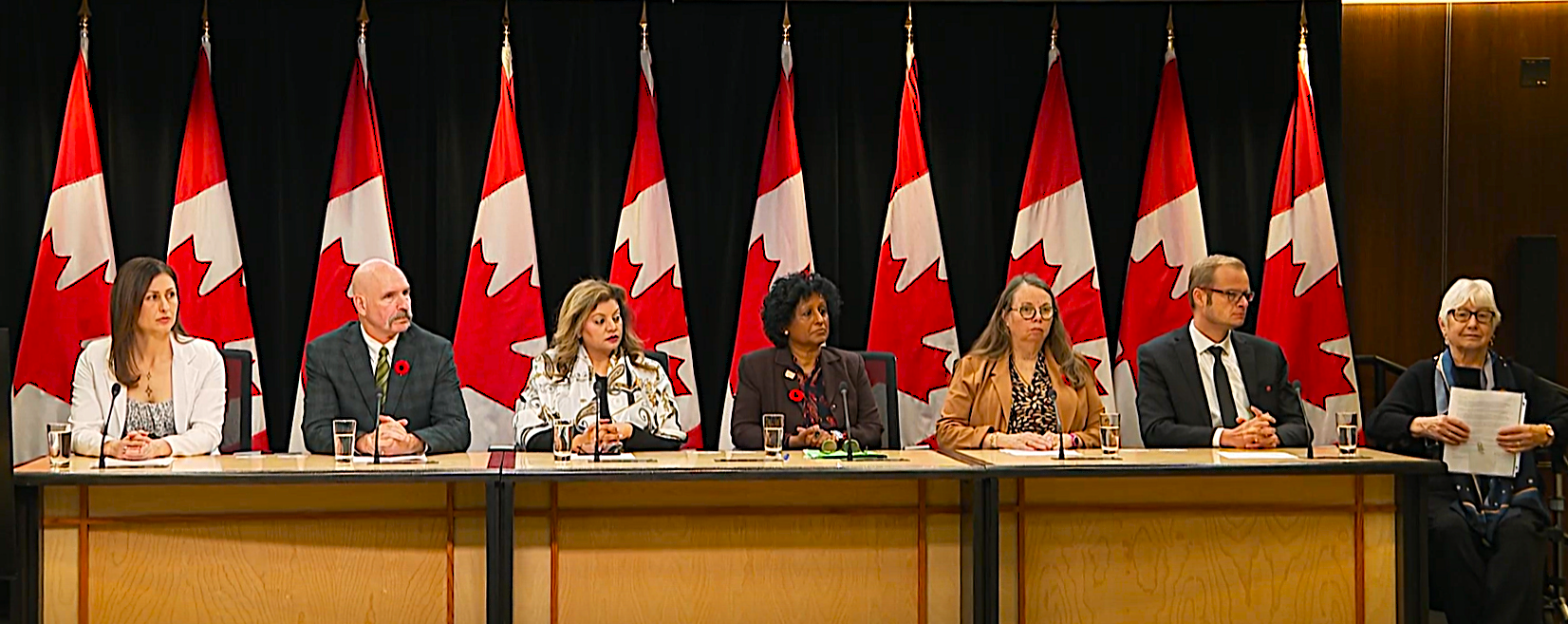
We were hosted by MP Arnold Viersen and Senator Julie Miville-Dechêne, and joined by an impressive team of advocates lead by co-authors Andrea Heinz and Kathy King. Last Thursday, before departing Ottawa, we gathered for a parliamentary press conference. Below is my statement.
Press Statement, John Cassells, November 6, 2025
My name is John Cassells. I am the Founder and Board Chair of Men Ending Trafficking, a charitable advocacy organization based in the Toronto Area. Also, in my full-time role with SIM Canada, I am the Director of an agency called Lifeworthy. In addition to assisting young women exiting the sex industry, we provide support and guidance for parents of adult and minor-aged children who are actively being exploited.
The year was 2014 when Justice Minister, Peter MacKay signaled that the Government of Canada had come to a new understanding on the concern of prostitution; that it is profoundly harmful and inherently exploitative. He had searched for a legal framework to lower the risk to those in prostitution and found none. The clear path, then, was to discourage, wholesale, the prostitution industry. That would largely be accomplished by deterring the purchase of sexual services.
Click to watch John speaking at the parliamentary press conference.
MacKay placed a robust legal scheme on the table: The Protection of Communities and Exploited Persons Act or PCEPA. Prostitution, which had been historically passed off as a mere public nuisance, would be more appropriately be reframed as a crime of exploitation.
I regret to tell you that Canada’s 2014 anti-prostitution law was neither appropriately implemented nor enforced in the provinces and territories, and prostitution activities continue to be licensed by our cities. Even some politicians elected to look out for the wellbeing of their own communities remained in opposition to PCEPA. In the House of Commons, we heard it argued that “Sex work is work.”
Which is it? Is prostitution a viable career option or is it a form of exploitation? The dozens of parents in Lifeworthy’s parents’ program will answer the question without hesitation. They will tell you about the radical changes in the behaviour of their children and the loss of relationship they experienced. They will speak about the violence perpetrated against their daughters and describe the injuries to their bodies. They will testify to the deteriorating mental and physical health of their daughters and lament over the addictions that took hold from efforts to self-medicate. Many will share that the nightmare continues without relief or closure. Some, who have received closure, will tell you about the anguish of having to bury a daughter. These are some of the people who are most qualified to tell you what happens when men buy sex.
In conclusion, I’ll quote from the book, When Men Buy Sex, Who Really Pays, by Andrea Heinz and Kathy King (Page 165) “…condemnation of sex trafficking is an important first step, but distinct hypocrisy prevails if we do not address the underlying issue of consumer demand.”
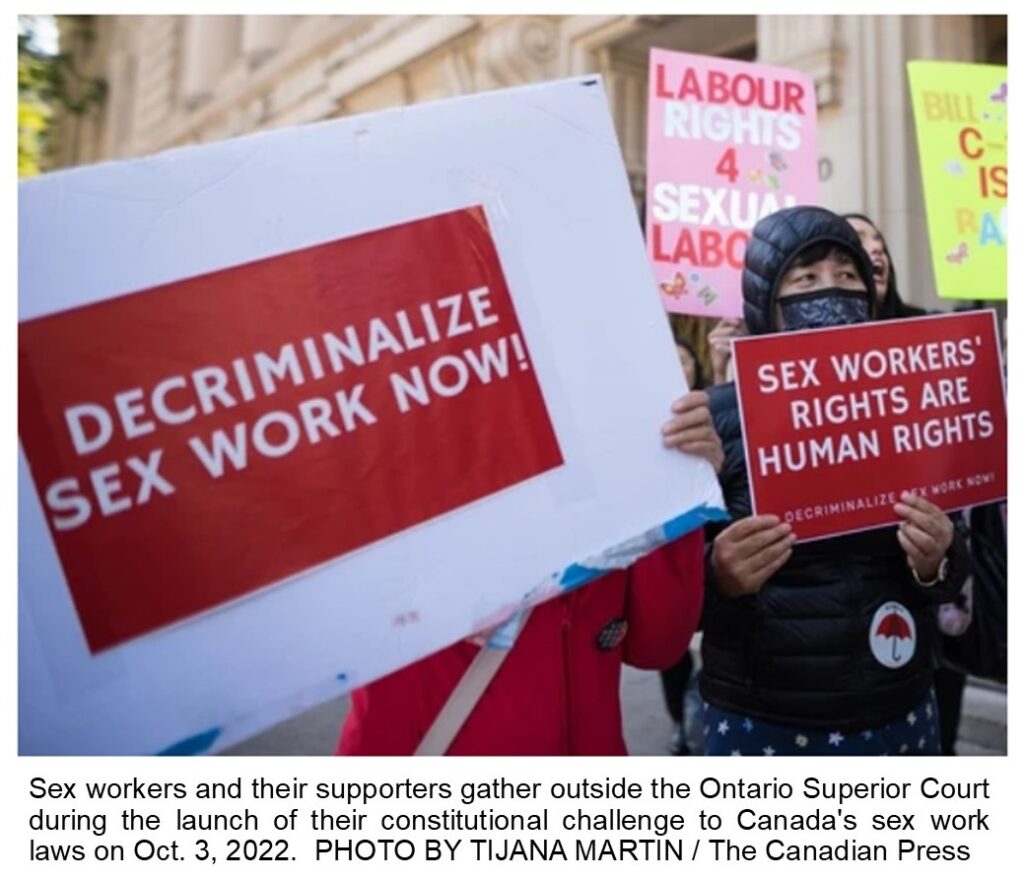
Just as the earth had thawed enough in Toronto to let the crocuses peak through in the Spring of 2021, a chilly suit was filed in a call to decriminalize prostitution. A network prostitutes and pro-prostitution agencies called Canadian Alliance for Sex Work Law Reform (CASWLR) claimed that Canada’s prostitution laws were in violation of their members’ Charter Rights.
The CASWLR was not able to make a coherent case and came up on the loosing side of the ruling. Justice Robert. F. Goldstein couldn’t have been more direct when he declared that none of the challenged offences violate Canada’s Charter of Rights and Freedoms.[i] He underscored that prostitution can not be considered a constitutional right and justified Parliament’s prohibition of it. He went on to recognize compassionate elements of the legislation and pointed out that the Criminal Code still allows prostitutes to take “safety measures” and “seek police assistance without fear [of prosecution].”[ii]
A representative from the group lamented that loosing in court left them feeling “deeply, deeply disappointed”. Coalition of Agencies Against Sex Trafficking (COAST), that included the likes of Men Ending Trafficking and Lifeworthy, was an intervenor on the opposite side of the case. COAST Spokesman, Robert Vallée from Parents Against Child Trafficking, jubilantly called it “a fantastic” ruling.[iii]
But who is right?
Not many years ago, Canada dealt with a similar challenge in a case called Bedford versus Canada that gave way to a new strategy meant to reduce human trafficking and other forms of sex trade violence[iv]. The new legal scheme was dubbed, Protection of Communities and Exploited Person’s Act (PCEPA)[v] and more completely outlawed the sexual services industry. Oddly, anti-human trafficking groups still can’t agree if discouraging prostitution helps more people than it hurts.
Justin Trudeau once stated, “prostitution itself is a form of violence against women.” Differing remarks from his party, however, prompted one cabinet minister to declare, “making prostitution and illegal drugs more accessible to Canadians are [Liberal] priorities.”[vi] Wherever the federal Liberals actually stood on the issue, the NDP took a clear position when their member from Esquimalt-Saanich-Sooke, Randall Garrison, claimed that Canada’s prostitution laws create “unnecessary harm for sex workers” and filed a 2022 motion to refer the new prostitution laws to a parliamentary committee for review. MP Garrison urged, “the PCEPA review must begin right away because lives are at risk.”[vii]
Once the PCEPA review was scheduled, Sascha Eaton, an advisor to Men Ending Trafficking and a peer leader at Lifeworthy, helped me put together a brief[viii] for the Standing Committee on Justice and Human Rights. In a paragraph we sum up our position and explain why we couldn’t agree with Garrison’s bid to remove laws that discourage prostitution.
Ms. Eaton became immersed in the subculture of the sex trade when she was a minor and remained in it for more than five years. There was a time when she could not speak honestly about her experiences, but it’s been a long time since she was in that place. She testifies that the sex trade is filled with young women being subjected to physical violence and emotional trauma, and that many become reliant, as she did, on illicit substances to cope. “Relatively few women who have walked in my shoes,” she confides, “Can continue claiming that prostitution is empowering, compared to the countless others who reflect on their experiences as profoundly destructive and life-altering.”
In the end, the Justice Committee came up with a list of unhelpful recommendations but stopped short of suggesting that prostitution should be decriminalized. It did say that prostitutes should be allowed to stop traffic when soliciting for sex from street corners,[ix] that restrictions on advertising prostitution services should be lifted,[x] and that Canada should soften immigration rules to welcome prostitutes from foreign countries.[xi] That last one would not play into the hands of international human trafficking cartels, would it?
In a separate case, a Newmarket, Ontario court Judge ruled in April 2021 that recruiting prostitutes and marketing them to sex buyers could be considered a legitimate enterprise. After Justice Sutherland declared sections of the Criminal Code that prohibited such activities unconstitutional, Ontario’s Attorney General Appealed. News outlets spun the story to make it sound like PCEPA was the problem and characterized pimps as hired hands instead of what they brag about, outside of the courtroom.[xii]
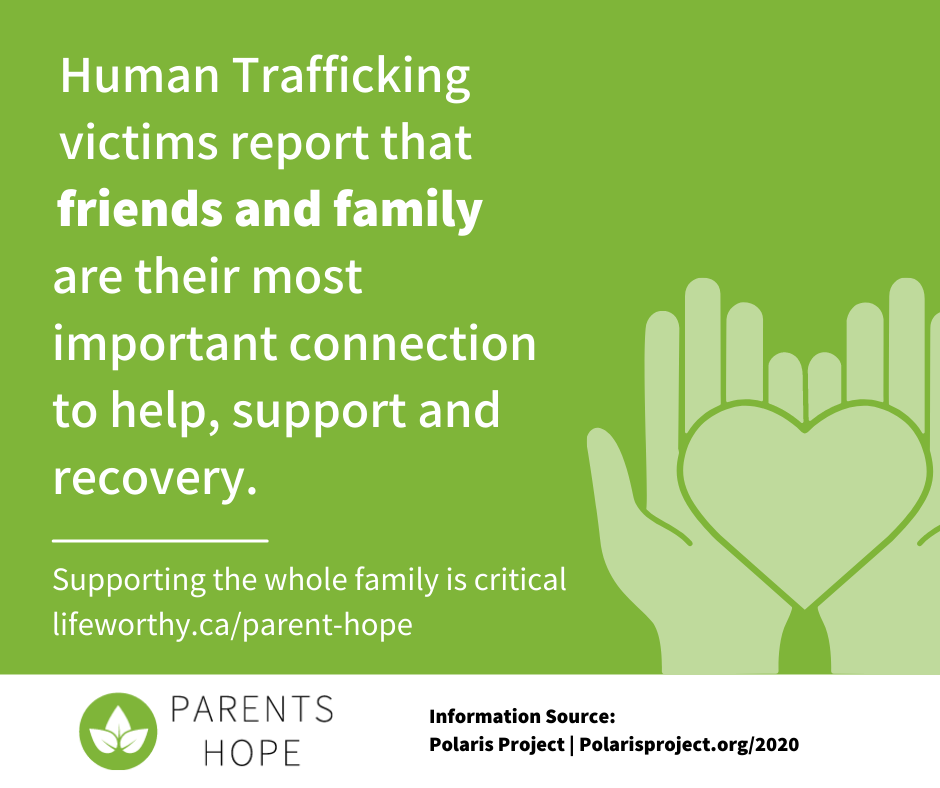
Crown attorneys reached out to several experts for a variety of affidavits as they prepared to argue against the bad ruling. I was asked to focus on the harms of prostitution, and I wondered if my statistics from Lifeworthy’s Parents Hope program might be helpful.
Parents of individuals in the sex trade shouldn’t need support if “sex work” is a legitimate job, I reasoned, but that wasn’t our experience. Here’s what I was able to report:
“The daughters first became involved in the sex trade between the ages of 12 and 20…the average age of entry was 15.7 years old. Twelve percent (six out of 50) tragically passed away in the past four years. Their causes of death include suicide, homicide and what is believed to be accidental drug overdose. Most of the parents in our Parents Hope program reported radical changes in the behavior of their daughters…physical injuries on the bodies of their daughters, especially bruising on the face, head, torso and legs… They also described deteriorating mental and physical health of their daughters and heavy use of alcohol and/or drugs.”
The appellate court disagreed with the lower court’s ruling and kept pimping laws in place. Had that case gone the other way, it may well have had an impact on this latest ruling. Thankfully, that didn’t happen.
I don’t know that there could be a perfect legal approach in the quest for health and safety of communities and exploited persons when it comes to prostitution. What we have in PCEPA, however, is a compassionate approach that, as Justice Goldstein notes, protects prostitutes from “prosecution for selling or advertising their own sexual services” though he notes it is still “contrary to law.”[xiii] What is missing in the fight against commercial sexual exploitation is not appropriate legislation, it is the political will to genuinely discourage the practice of prostitution. If human rights issues remain a priority for Canada, prostitution will continue to be recognized as a criminal activity and the men who fund it will be held accountable.
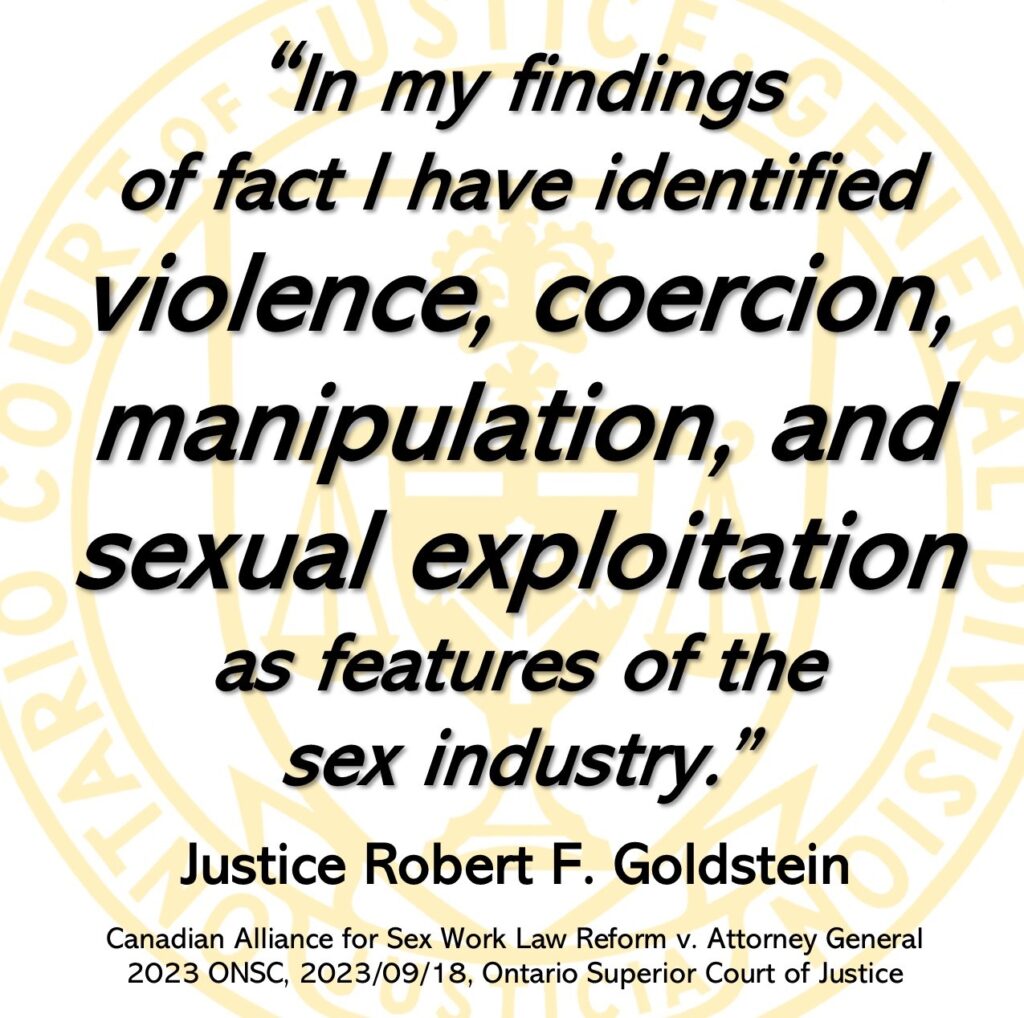
I suppose we can expect CASWLR to appeal the ruling they lost in the lower court and to find other avenues to try to legitimize their views. None of their efforts, however, will change the fact that prostitution is plagued by violence, coercion, manipulation, and sexual exploitation[xiv] or that Parliament was right in outlawing it. Anyone seeking to decriminalize prostitution in Canada is woefully ignorant or callously indifferent to the human toll that it takes on women and children.
[i] Page 3, Canadian Alliance for Sex Work Law Reform v. Attorney General 2023 ONSC 5197 COURT FILE NO.: CV-21-659594 DATE: 20230918, ONTARIO SUPERIOR COURT OF JUSTICE
[ii] Page 4, Canadian Alliance for Sex Work Law Reform v. Attorney General 2023 ONSC 5197 COURT FILE NO.: CV-21-659594 DATE: 20230918, ONTARIO SUPERIOR COURT OF JUSTICE
[ix] “…amend the Protection of Communities and Exploited Persons Act by introducing legislation to repeal sections 213 and 286.4 of the Criminal Code.” p. 38, Recommendation 3, PREVENTING HARM IN THE CANADIAN SEX INDUSTRY: A REVIEW OF THE PROTECTION OF COMMUNITIES AND EXPLOITED PERSONS ACT June 2022, Standing Committee on Justice and Human Rights
[xi] “…repeal sections 183 (1)(b.1). 196.1(a). 200(3)(g.1) and 203(2)(a) of the Immigration and Refugee Protection Regulations, which unfairly put migrant sex workers at elevated risk of violence and danger by making them unable to report these incidents without fear of deportation.” p. 49, Recommendation 10, PREVENTING HARM IN THE CANADIAN SEX INDUSTRY: A REVIEW OF THE PROTECTION OF COMMUNITIES AND EXPLOITED PERSONS ACT June 2022, Standing Committee on Justice and Human Rights.
NOTE: None of these targeted sections of Immigration and Refugee Protection create safety risks for newcomers. They safeguard foreign nationals and temporary residents by preventing them from ending up in Canada’s most exploitative, harmful, and largely criminal industry.
[xiii] Page 4, Canadian Alliance for Sex Work Law Reform v. Attorney General 2023 ONSC 5197 COURT FILE NO.: CV-21-659594 DATE: 20230918, ONTARIO SUPERIOR COURT OF JUSTICE
[xiv] “In my findings of fact I have identified violence, coercion, manipulation, and sexual exploitation as features of the commercial sex industry.” Justice Robert F. Goldstein, P. 136, Canadian Alliance for Sex Work Law Reform v. Attorney General 2023 ONSC 5197 COURT FILE NO.: CV-21-659594 DATE: 20230918, ONTARIO SUPERIOR COURT OF JUSTICE