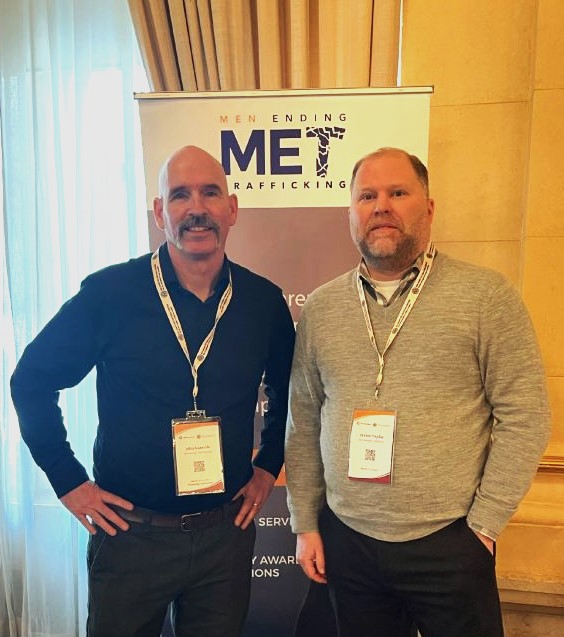
Men Ending Trafficking Men Ending Trafficking (Toronto) and EmpowerMen (Winnipeg) co-sponsored a series of events on Parliament Hill last week to recognize and discusses the Protection of Communities and Exploited Persons Act (PCEPA 2014). The endeavor was centered around the idea that every Senator and Member of Parliament should own a copy of the powerful new book, “WHEN MEN BUY SEX: Who Really Pays?” by Heinz & King. And so, on the 11th anniversary of PCEPA, we delivered 448 individually addressed copies of book to our nation’s capital!
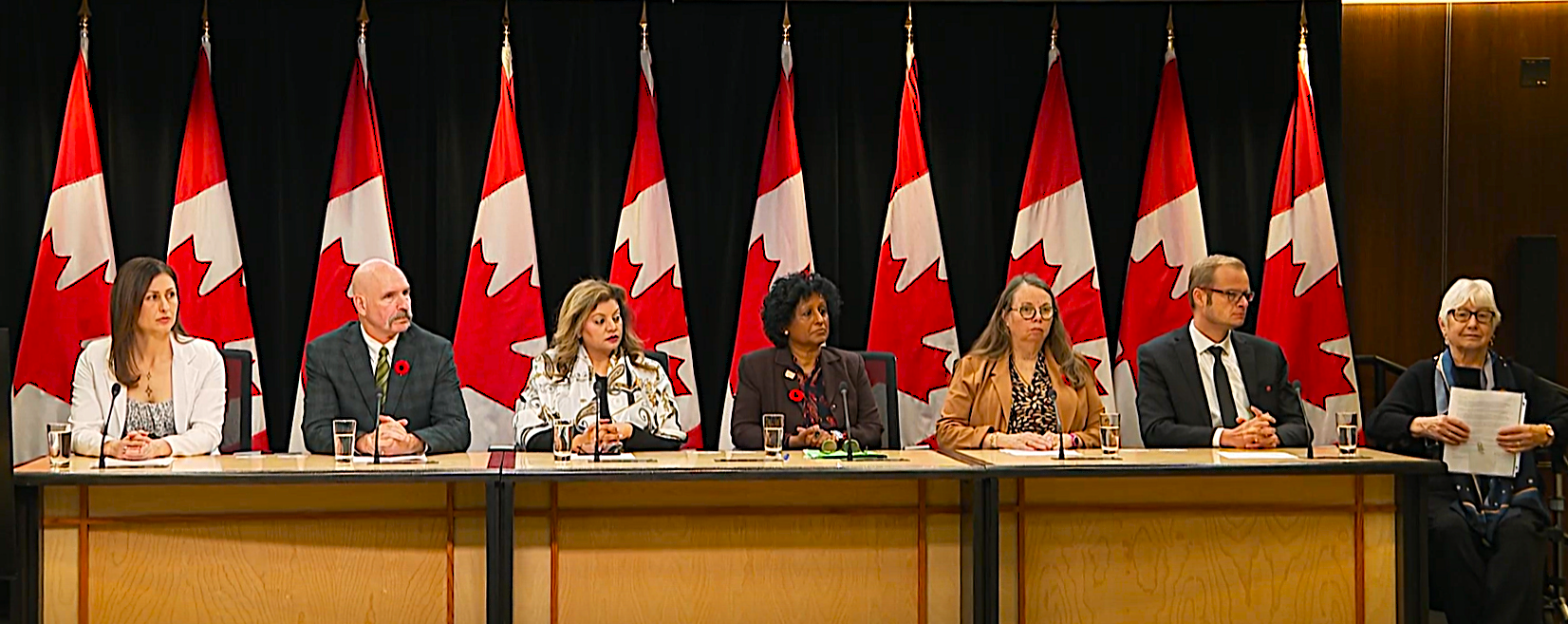
We were hosted by MP Arnold Viersen and Senator Julie Miville-Dechêne, and joined by an impressive team of advocates lead by co-authors Andrea Heinz and Kathy King. Last Thursday, before departing Ottawa, we gathered for a parliamentary press conference. Below is my statement.
Press Statement, John Cassells, November 6, 2025
My name is John Cassells. I am the Founder and Board Chair of Men Ending Trafficking, a charitable advocacy organization based in the Toronto Area. Also, in my full-time role with SIM Canada, I am the Director of an agency called Lifeworthy. In addition to assisting young women exiting the sex industry, we provide support and guidance for parents of adult and minor-aged children who are actively being exploited.
The year was 2014 when Justice Minister, Peter MacKay signaled that the Government of Canada had come to a new understanding on the concern of prostitution; that it is profoundly harmful and inherently exploitative. He had searched for a legal framework to lower the risk to those in prostitution and found none. The clear path, then, was to discourage, wholesale, the prostitution industry. That would largely be accomplished by deterring the purchase of sexual services.
Click to watch John speaking at the parliamentary press conference.
MacKay placed a robust legal scheme on the table: The Protection of Communities and Exploited Persons Act or PCEPA. Prostitution, which had been historically passed off as a mere public nuisance, would be more appropriately be reframed as a crime of exploitation.
I regret to tell you that Canada’s 2014 anti-prostitution law was neither appropriately implemented nor enforced in the provinces and territories, and prostitution activities continue to be licensed by our cities. Even some politicians elected to look out for the wellbeing of their own communities remained in opposition to PCEPA. In the House of Commons, we heard it argued that “Sex work is work.”
Which is it? Is prostitution a viable career option or is it a form of exploitation? The dozens of parents in Lifeworthy’s parents’ program will answer the question without hesitation. They will tell you about the radical changes in the behaviour of their children and the loss of relationship they experienced. They will speak about the violence perpetrated against their daughters and describe the injuries to their bodies. They will testify to the deteriorating mental and physical health of their daughters and lament over the addictions that took hold from efforts to self-medicate. Many will share that the nightmare continues without relief or closure. Some, who have received closure, will tell you about the anguish of having to bury a daughter. These are some of the people who are most qualified to tell you what happens when men buy sex.
In conclusion, I’ll quote from the book, When Men Buy Sex, Who Really Pays, by Andrea Heinz and Kathy King (Page 165) “…condemnation of sex trafficking is an important first step, but distinct hypocrisy prevails if we do not address the underlying issue of consumer demand.”
The United Nations has named July 30th as World Day Against Trafficking in Persons. I don’t normally mention this day because I think the UN is confused about the problem of human trafficking. But this year’s theme, “Human trafficking is Organized Crime”, caught my eye. The UN clarifies this proclamation by claiming human trafficking is “driven by organized crime.”
I think the UN is playing a shell game.
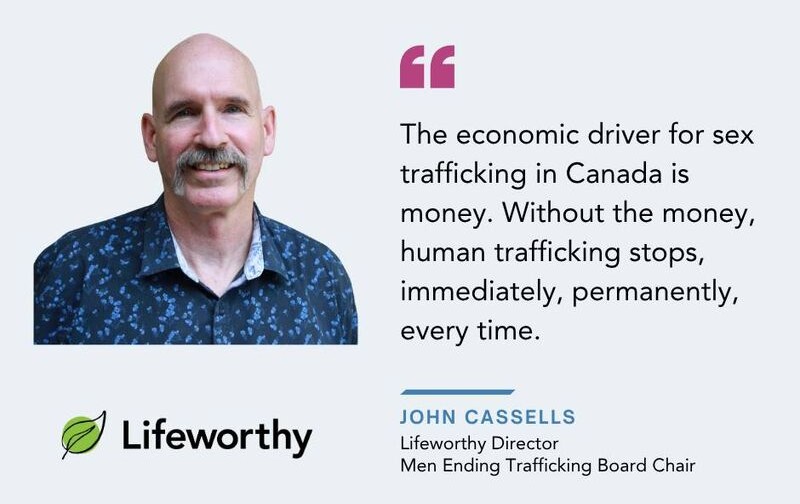
The UN is right to the degree that organized crime networks are significantly engaged in the clandestine business of trafficking in persons. If you look specifically at the Canadian sex industry, we don’t exactly know how much human trafficking involves organized crime or how much of it doesn’t. I can tell you, however, why organized crime groups choose human trafficking. But of course, I don’t need to; everyone knows it’s for financial profits. The economic driver for sex trafficking is money. Without the money, human trafficking stops, immediately, permanently, every time.
But not everyone wants to talk about the money. The UN cannot admit that money is the driver of human trafficking because they have taken a more-or-less pro-prostitution position. You see, if you discourage the purchase of sexual services, you not only reduce the incidence human trafficking, the prostitution marketplace, itself, also takes a major hit.
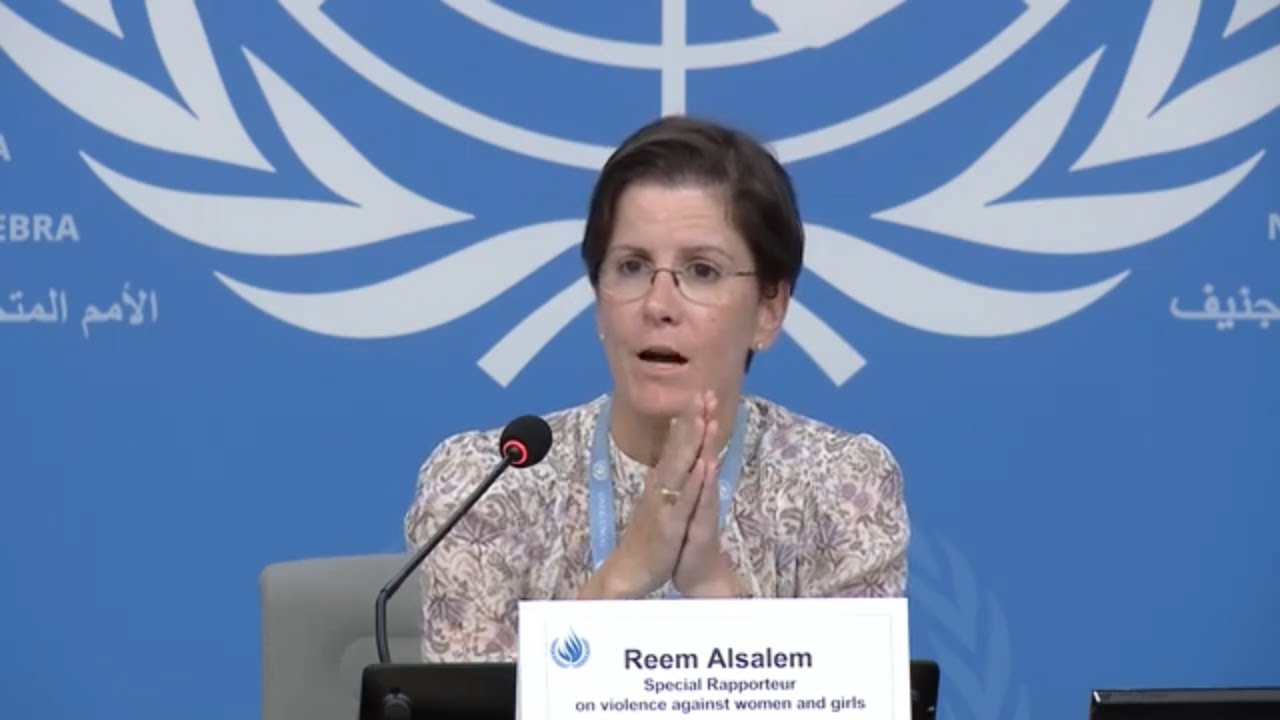
In October 2023, The United Nations Working Group on discrimination against women and girls defiantly called for the full decriminalization of “sex work” globally[i]. It appeared that the UN had a unanimous view about the purchase of sexual services until dissension erupted the following year. “Prostitution results in egregious violations of human rights and multiple forms of violence against women and girls, who are often dehumanized and perceived as persons without human rights.” argued the UN’s own Special Rapporteur on violence against women and girls[ii].
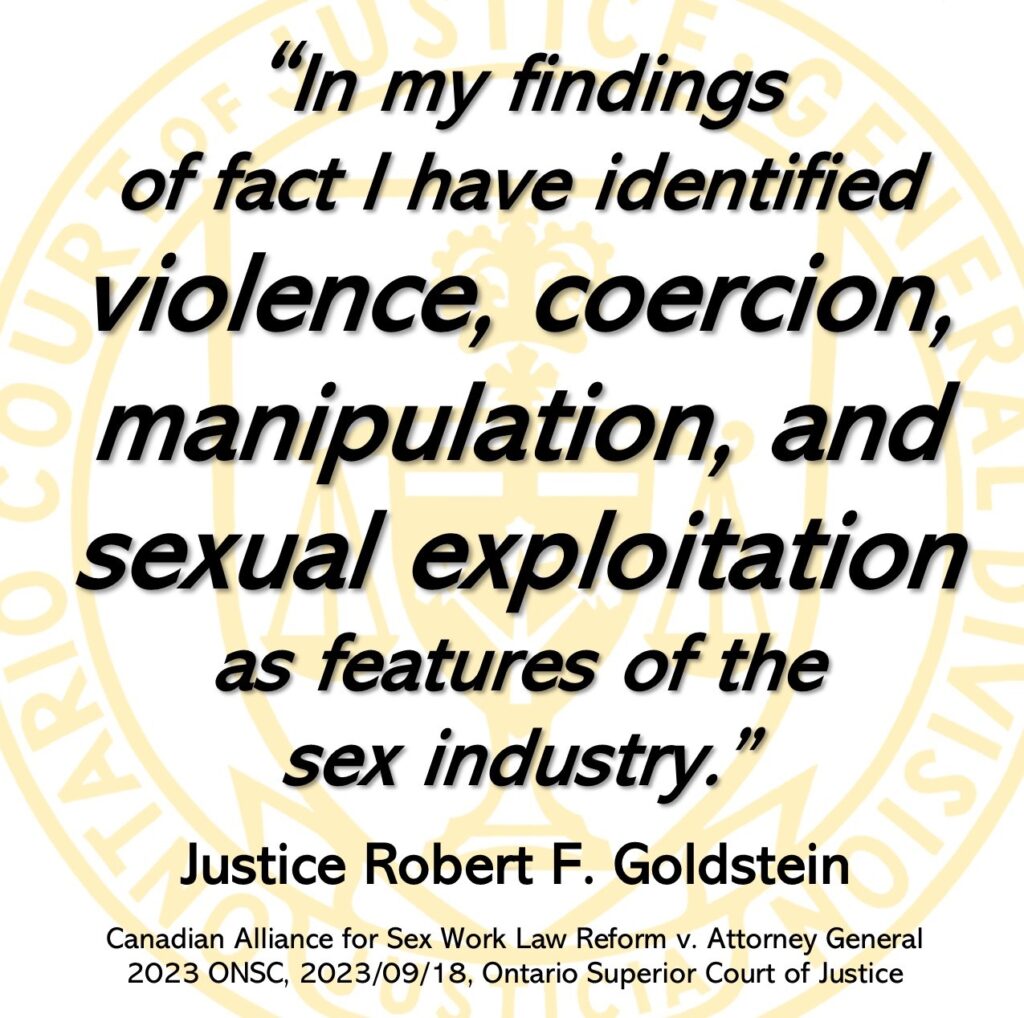
In Canada, parliament took a stand in claiming “that prostitution’s inherent harms and dangers would only grow and be exacerbated in a regime that perpetrates and condones the exploitation of vulnerable individuals through legalized prostitution”[iii]. That position has been appropriately upheld by the courts. In 2023, Justice R. Goldstein identified “violence, coercion, manipulation, and sexual exploitation as features of the commercial sex industry.”[iv]
This year’s World Day Against Trafficking in Persons theme is misleading, and I think that was the intention. Clearly, the UN still isn’t nearly concerned enough about the sex buyers who are responsible for funding 100% of human trafficking. I suggest that by placing full blame on the organized crime groups who are the agents of some human trafficking, they shield those who are actually driving it.
You tell me if that doesn’t look like a shell game.
[i] Guidance document of the Working Group on discrimination against women and girls: Eliminating discrimination against sex workers and securing their human rights | OHCHR
[ii] Reem Alsalem, Prostitution and violence against women and girls, Nexus between violence and prostitution, P. 4, United Nations General Assembly, Human Rights Council, Fifty-sixth session 18 June–12 July 2024
[iii] The Honorable Peter MacKay, Standing Committee on Justice and Human Rights, No. 032, 2nd Session, 41st Parliament. Monday, July7,2014, P. 1
[iv] Justice Robert F. Goldstein, P. 136, Canadian Alliance for Sex Work Law Reform v. Attorney General 2023 ONSC 5197 COURT FILE NO.: CV-21-659594 DATE: 20230918, ONTARIO SUPERIOR COURT OF JUSTICE
A groundbreaking conference was held March 4-6 to imagine a Canada that no longer tolerates the funding of Commercial sexual exploitation of women and girls. Here’s what happened:
A frigid Winnipeg awaited Trevor Poplar (Men Ending Trafficking) and I as we flew away from a balmy 15 Celsius in Toronto. Upon arrival we were whisked by cab to the majestic Fort Garry hotel to meet with other members from the national committee that had spent the previous eight months planning the ‘Prosecuting Demand’ conference. Leading the team was Hennes Doltze who works to engage men against exploitation at The Peg’s Ma Mawi Wi Chi Itata Centre.
The committee has been dubbed “SBAN” (Sex Buyers Accountability Network) and is largely made up of people who run “john schools” that reform the behavior of men who have been charged with purchasing sexual services[i]. While these programs are overwhelmingly effective and provide a revenue source for women’s recovery programs, they are sadly underutilized.
Prior to 2014, Canada’s prostitution laws served to shoo away streetwalkers who were, in the public eye, considered a mere nuisance. A new legal scheme called the Protection of Communities and Exploited Persons Act (PCEPA) was devised under the then federal Justice Minister, Peter Mackay. Mr. MacKay was careful enough to understand the fraud and coercion that typically brings vulnerable young people into the sex trade and the exploitation[ii] that inevitably follows. Commercial sexual services would no longer be classified as an annoyance but as a (largely) gender-based crime[iii] that destroys bodies and souls. PCEPA prohibits prostitution and especially targets the economic driver behind human trafficking -the men who pay for it.
Justice Minister Peter MacKay. June 4, 2014, introduced Bill C-36 to criminalize the purchase of sexual services. Mr. MacKay referred to sex buyers as ‘perverts.’ (Photo Credit: Sean Kilpatrick/Canadian Press)
Provinces across our nation have largely ignored the 2014 national confession that prostitution is a crime of exploitation. We continue to wait for even one region to appropriately implement and enforce legal measures to address demand. Meanwhile, the money from sex buyers continues to flow into the pockets of human traffickers who, in turn, ensure a steady stream of new adolescent recruits.
SBAN members have individually encouraged their own provinces and municipalities to utilize appropriate enforcement practices, however, the Winnipeg conference shifted the approach by bringing together 150 delegates, including crown attorneys, police officers, analysts and policy makers. Sessions were taught by leading experts in their respective fields.
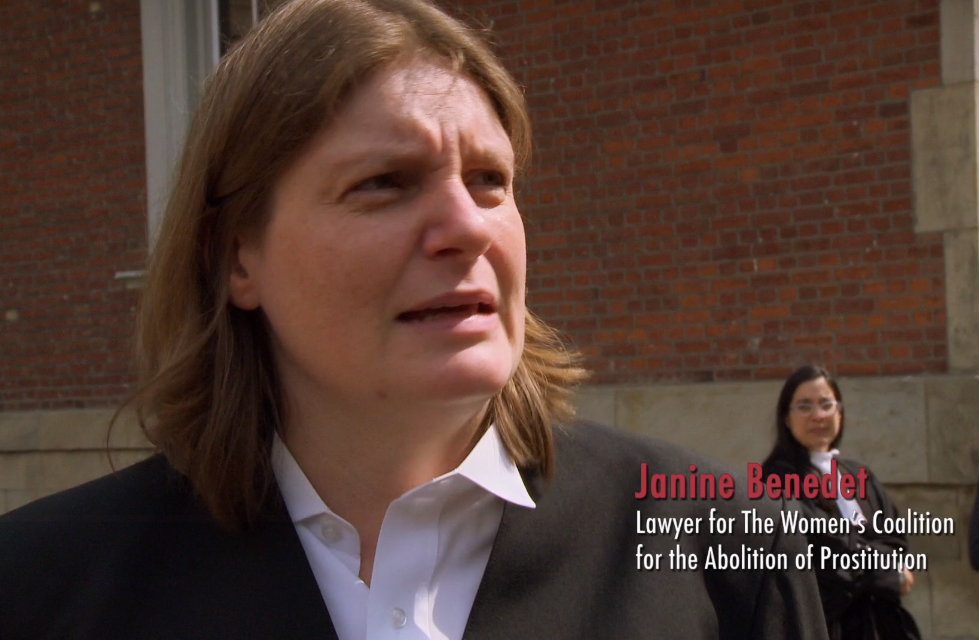
Janine Benedet, 2011, Ontario Court of Appeal, Bedford v Canada (Credit: Buying Sex film, NFB)
UBC Law Professor, Janine Benedet, kicked off the conference with analysis of the legal prohibition on prostitution. She was brilliant! Dr. Kari Johnston, Coordinator for Combating Trafficking in Human Beings, at OSCE (Organization for security and Co-operation in Europe) also addressed the crowd. The room fell deathly silent when Dr. Johnstone declared that not one of the 57 of their member countries, including Canada, is fulfilling their agreement to address “the demand for sexual exploitation”[iv].
As workshops were presented over a span of two days, evidence that we could turn the tide on human trafficking and other forms of sex trade violence mounted and a palatable air of enthusiasm infused the conference. Feedback from delegates confirmed the event was an astounding success. Be assured that SBAN will keep working on this file. The fruit of our labors, however, remains to be seen in policy reforms geared to discouraging the demand for commercial sexual exploitation.
Keep fighting for change. I’ll keep you posted from this end.
[i] Section 286.1 Obtaining sexual services for consideration, Criminal Code of Canada, “ Everyone who, in any place, obtains for consideration, or communicates with anyone for the purpose of obtaining for consideration, the sexual services of a person…”
[ii] Bill C-36, 2014, Technical Paper, P.3 “Bill C-36 reflects a significant paradigm shift away from the treatment of prostitution as “nuisance”, as found by the Supreme Court of Canada in Bedford, toward treatment of prostitution as a form of sexual exploitation that disproportionately and negatively impacts on women and girls.”
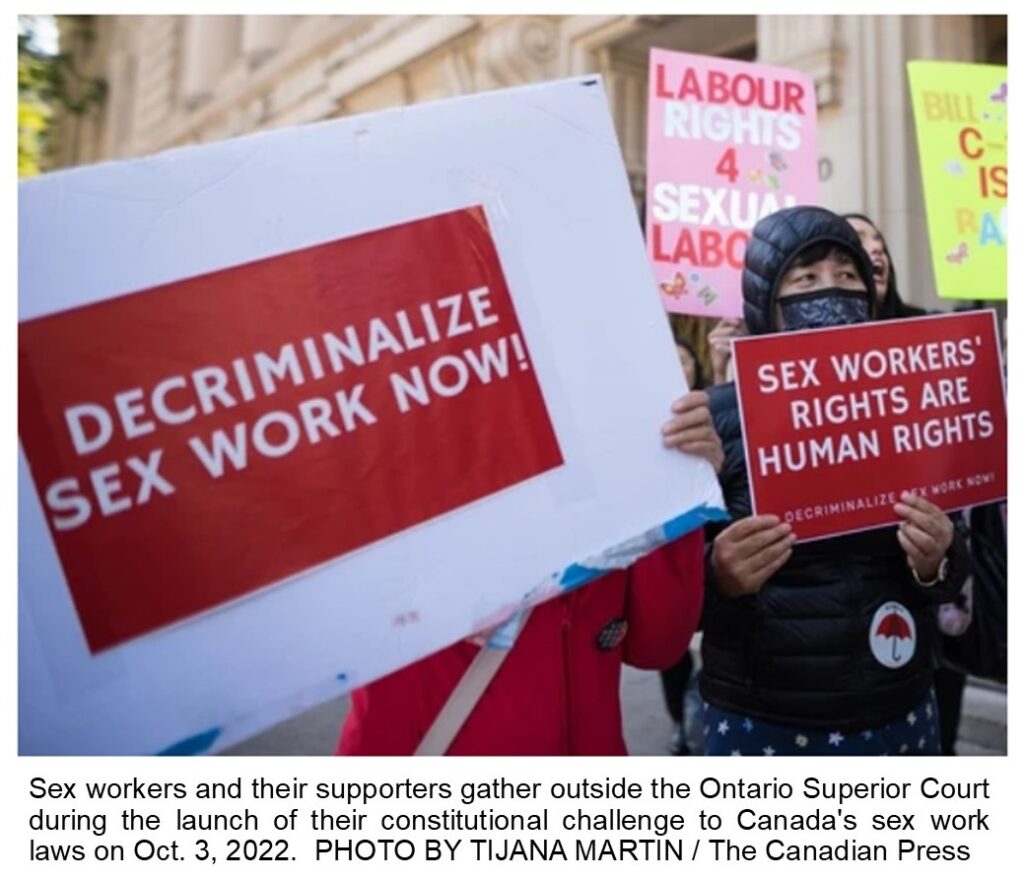
Just as the earth had thawed enough in Toronto to let the crocuses peak through in the Spring of 2021, a chilly suit was filed in a call to decriminalize prostitution. A network prostitutes and pro-prostitution agencies called Canadian Alliance for Sex Work Law Reform (CASWLR) claimed that Canada’s prostitution laws were in violation of their members’ Charter Rights.
The CASWLR was not able to make a coherent case and came up on the loosing side of the ruling. Justice Robert. F. Goldstein couldn’t have been more direct when he declared that none of the challenged offences violate Canada’s Charter of Rights and Freedoms.[i] He underscored that prostitution can not be considered a constitutional right and justified Parliament’s prohibition of it. He went on to recognize compassionate elements of the legislation and pointed out that the Criminal Code still allows prostitutes to take “safety measures” and “seek police assistance without fear [of prosecution].”[ii]
A representative from the group lamented that loosing in court left them feeling “deeply, deeply disappointed”. Coalition of Agencies Against Sex Trafficking (COAST), that included the likes of Men Ending Trafficking and Lifeworthy, was an intervenor on the opposite side of the case. COAST Spokesman, Robert Vallée from Parents Against Child Trafficking, jubilantly called it “a fantastic” ruling.[iii]
But who is right?
Not many years ago, Canada dealt with a similar challenge in a case called Bedford versus Canada that gave way to a new strategy meant to reduce human trafficking and other forms of sex trade violence[iv]. The new legal scheme was dubbed, Protection of Communities and Exploited Person’s Act (PCEPA)[v] and more completely outlawed the sexual services industry. Oddly, anti-human trafficking groups still can’t agree if discouraging prostitution helps more people than it hurts.
Justin Trudeau once stated, “prostitution itself is a form of violence against women.” Differing remarks from his party, however, prompted one cabinet minister to declare, “making prostitution and illegal drugs more accessible to Canadians are [Liberal] priorities.”[vi] Wherever the federal Liberals actually stood on the issue, the NDP took a clear position when their member from Esquimalt-Saanich-Sooke, Randall Garrison, claimed that Canada’s prostitution laws create “unnecessary harm for sex workers” and filed a 2022 motion to refer the new prostitution laws to a parliamentary committee for review. MP Garrison urged, “the PCEPA review must begin right away because lives are at risk.”[vii]
Once the PCEPA review was scheduled, Sascha Eaton, an advisor to Men Ending Trafficking and a peer leader at Lifeworthy, helped me put together a brief[viii] for the Standing Committee on Justice and Human Rights. In a paragraph we sum up our position and explain why we couldn’t agree with Garrison’s bid to remove laws that discourage prostitution.
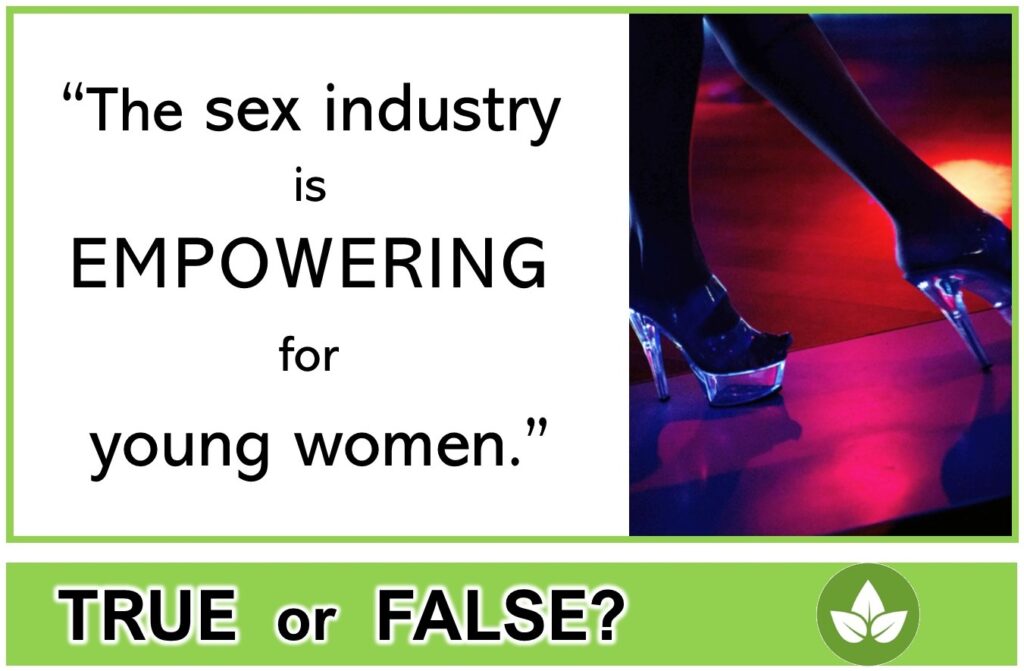
Ms. Eaton became immersed in the subculture of the sex trade when she was a minor and remained in it for more than five years. There was a time when she could not speak honestly about her experiences, but it’s been a long time since she was in that place. She testifies that the sex trade is filled with young women being subjected to physical violence and emotional trauma, and that many become reliant, as she did, on illicit substances to cope. “Relatively few women who have walked in my shoes,” she confides, “Can continue claiming that prostitution is empowering, compared to the countless others who reflect on their experiences as profoundly destructive and life-altering.”
In the end, the Justice Committee came up with a list of unhelpful recommendations but stopped short of suggesting that prostitution should be decriminalized. It did say that prostitutes should be allowed to stop traffic when soliciting for sex from street corners,[ix] that restrictions on advertising prostitution services should be lifted,[x] and that Canada should soften immigration rules to welcome prostitutes from foreign countries.[xi] That last one would not play into the hands of international human trafficking cartels, would it?
In a separate case, a Newmarket, Ontario court Judge ruled in April 2021 that recruiting prostitutes and marketing them to sex buyers could be considered a legitimate enterprise. After Justice Sutherland declared sections of the Criminal Code that prohibited such activities unconstitutional, Ontario’s Attorney General Appealed. News outlets spun the story to make it sound like PCEPA was the problem and characterized pimps as hired hands instead of what they brag about, outside of the courtroom.[xii]
Crown attorneys reached out to several experts for a variety of affidavits as they prepared to argue against the bad ruling. I was asked to focus on the harms of prostitution, and I wondered if my statistics from Lifeworthy’s Parents Hope program might be helpful.
Parents of individuals in the sex trade shouldn’t need support if “sex work” is a legitimate job, I reasoned, but that wasn’t our experience. Here’s what I was able to report:
“The daughters first became involved in the sex trade between the ages of 12 and 20…the average age of entry was 15.7 years old. Twelve percent (six out of 50) tragically passed away in the past four years. Their causes of death include suicide, homicide and what is believed to be accidental drug overdose. Most of the parents in our Parents Hope program reported radical changes in the behavior of their daughters…physical injuries on the bodies of their daughters, especially bruising on the face, head, torso and legs… They also described deteriorating mental and physical health of their daughters and heavy use of alcohol and/or drugs.”
The appellate court disagreed with the lower court’s ruling and kept pimping laws in place. Had that case gone the other way, it may well have had an impact on this latest ruling. Thankfully, that didn’t happen.
I don’t know that there could be a perfect legal approach in the quest for health and safety of communities and exploited persons when it comes to prostitution. What we have in PCEPA, however, is a compassionate approach that, as Justice Goldstein notes, protects prostitutes from “prosecution for selling or advertising their own sexual services” though he notes it is still “contrary to law.”[xiii] What is missing in the fight against commercial sexual exploitation is not appropriate legislation, it is the political will to genuinely discourage the practice of prostitution. If human rights issues remain a priority for Canada, prostitution will continue to be recognized as a criminal activity and the men who fund it will be held accountable.
I suppose we can expect CASWLR to appeal the ruling they lost in the lower court and to find other avenues to try to legitimize their views. None of their efforts, however, will change the fact that prostitution is plagued by violence, coercion, manipulation, and sexual exploitation[xiv] or that Parliament was right in outlawing it. Anyone seeking to decriminalize prostitution in Canada is woefully ignorant or callously indifferent to the human toll that it takes on women and children.
[i] Page 3, Canadian Alliance for Sex Work Law Reform v. Attorney General 2023 ONSC 5197 COURT FILE NO.: CV-21-659594 DATE: 20230918, ONTARIO SUPERIOR COURT OF JUSTICE
[ii] Page 4, Canadian Alliance for Sex Work Law Reform v. Attorney General 2023 ONSC 5197 COURT FILE NO.: CV-21-659594 DATE: 20230918, ONTARIO SUPERIOR COURT OF JUSTICE
[ix] “…amend the Protection of Communities and Exploited Persons Act by introducing legislation to repeal sections 213 and 286.4 of the Criminal Code.” p. 38, Recommendation 3, PREVENTING HARM IN THE CANADIAN SEX INDUSTRY: A REVIEW OF THE PROTECTION OF COMMUNITIES AND EXPLOITED PERSONS ACT June 2022, Standing Committee on Justice and Human Rights
[xi] “…repeal sections 183 (1)(b.1). 196.1(a). 200(3)(g.1) and 203(2)(a) of the Immigration and Refugee Protection Regulations, which unfairly put migrant sex workers at elevated risk of violence and danger by making them unable to report these incidents without fear of deportation.” p. 49, Recommendation 10, PREVENTING HARM IN THE CANADIAN SEX INDUSTRY: A REVIEW OF THE PROTECTION OF COMMUNITIES AND EXPLOITED PERSONS ACT June 2022, Standing Committee on Justice and Human Rights.
NOTE: None of these targeted sections of Immigration and Refugee Protection create safety risks for newcomers. They safeguard foreign nationals and temporary residents by preventing them from ending up in Canada’s most exploitative, harmful, and largely criminal industry.
[xiii] Page 4, Canadian Alliance for Sex Work Law Reform v. Attorney General 2023 ONSC 5197 COURT FILE NO.: CV-21-659594 DATE: 20230918, ONTARIO SUPERIOR COURT OF JUSTICE
[xiv] “In my findings of fact I have identified violence, coercion, manipulation, and sexual exploitation as features of the commercial sex industry.” Justice Robert F. Goldstein, P. 136, Canadian Alliance for Sex Work Law Reform v. Attorney General 2023 ONSC 5197 COURT FILE NO.: CV-21-659594 DATE: 20230918, ONTARIO SUPERIOR COURT OF JUSTICE
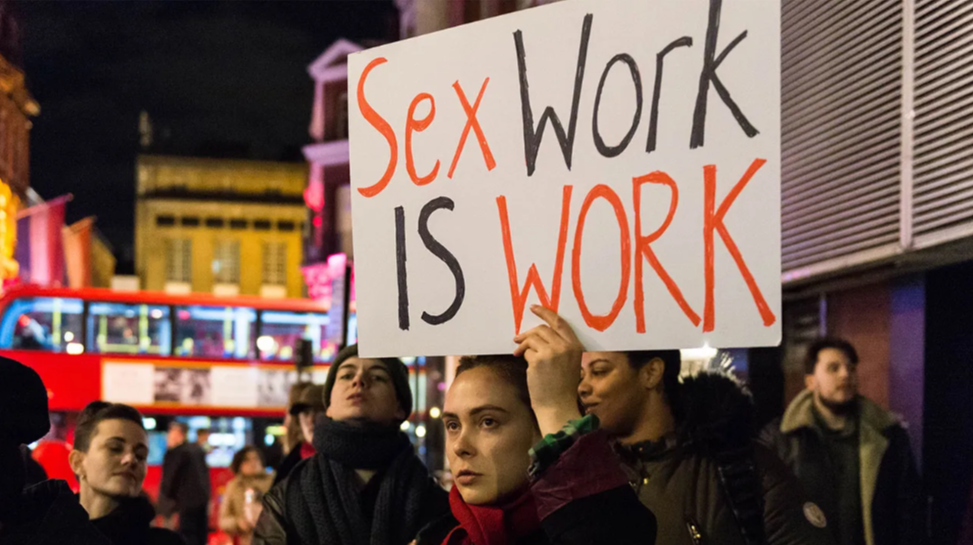
You might have heard it said that ‘sex work’ is real work.
I heard it most recently at a sex trafficking prevention event commemorating World Day Against Trafficking in Persons, July 30th, proclaimed by the United Nations. Presenters included officers from a Greater Toronto Area regional police service who spoke about their dealings with traffickers and a Victim Services worker who spoke about teaching school-age kids to evade traffickers. One would presume that such events are helpful and, as they purportedly prevent human trafficking, potentially lifesaving. They might not be.
‘Sex work’ does not refer specifically to sexual services (or prostitution) which is prohibited under the Canadian Criminal Code. It is a broader term that also includes legal adult entertainment, such as exotic dancing (or stripping). While the anti-human trafficking community has helped to remove stigma from victims of exploitation, especially in prostitution, the ‘sex worker movement’ presses further, to validate prostitution or as a legitimate profession.
The sex worker movement got underway in the 1970s, diligently working to shape language and narrative. One of the early activists contended the word ‘prostitute’ was tarnished and, in response, coined the term ‘sex work’ as a more inviting default.[i]. Pro-sex work activist, Elena Jeffreys writes, “The term ‘sex work’, and the history of the term, has a huge impact on the way the sex worker movement fights today.”[ii] That term had already been adopted by the World Health Organization well before the anti-human trafficking movement took root in Canada.[iii]
Photo Credit: Teen Vogue,”Why Sex Work is Real Work” article by Dr. T. Mofokeng, April 26, 2019.
There is much disorder in the sex trade and it’s common for entertainers, providing legal acts, to also engage patrons in illegal acts for extra money. Many times, the crossing of legal boundaries is quite intentional. But the boundaries are sometimes unclear to the participants. Take lap dancing for example. Is that merely exotic dancing?
A 1997 Supreme Court ruling said that the sexual contact involved in lap dancing qualifies it as prostitution. Though prostitution wasn’t technically illegal that the time, the court noted that this activity would not be considered tolerable by Canadian societal standards because “It degrades and dehumanizes women; it desensitizes sexuality and is incompatible with the dignity and equality of each human being”[iv]. But just two years later, the Supreme Court also ruled that a similar prostitution incident in the other Canadian society of Quebec was acceptable[v]. It seemed we needed a stronger legal scheme to know where to draw the line.
Fast forward to 2014 when the federal government finally made prostitution a straight-out criminal offence. Peter MacKay, our federal justice minister at the time, stated that discouraging the demand for prostitution will protect vulnerable Canadians from “prostitution’s implicit harms”[vi] including the commercial sexual exploitation of children and the human trafficking of adults. His government even thought of adding limited immunity for prostitutes on the assumption that they are exploited persons. That didn’t mean prostitution is halfway legal. It meant to discourage the purchase of sexual services, thereby decreasing the demand for prostituted women and girls, and the money that can be made by third parties. The government did not take issue with erotic arts that don’t actually involve prostitution.
Proponents of legalized prostitution seemed to pay no heed. They carried on tagging the new crime as “sex work” and continued to lump it together with legal sex trade activities, promoting it all as a legitimate and liberating career option.
We all want health and prosperity for Canada’s young women, but some of us need to pull our heads out of the clouds. I’ve met the women and girls who have spent time in the sex trade; hundreds of them. In each case I’ve observed carnage. Extreme anxiety and depression are the norm. Chronic medical conditions and addiction issues are common. Full recovery takes many years if it is ever achieved. One in 10 young women associated with my SIM agency, Lifeworthy,[vii] has passed away.
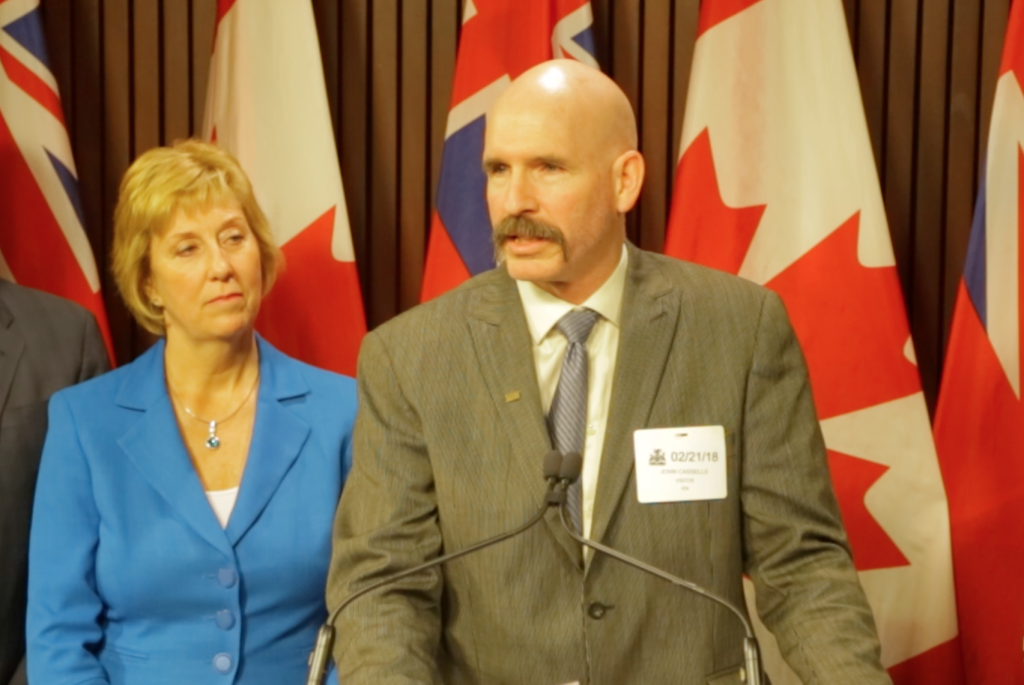
John Cassells with MPP Laurie Scott, combatting child sex trafficking, Queen’s Park, Toronto, 2018.
Since I began looking at the phenomenon of sex trafficking in Canada, fifteen years ago, I’ve observed that the stigma attached to prostitution has been waning among young people. One 2015 study[viii] agrees that Canadians have become significantly more accepting of it since the 1990s. It follows then, that more young people would consider it an option. As I continue to meet young women who have not yet exited the sex trade, I repeatedly hear them say:
“It’s not a moral issue for me, it’s a job,” or, “Everyone’s doing it.”
It’s often not until after they exit that they’ll admit,
“It’s not a job, it’s abuse.” or “Nobody should do it.”
A young woman, I’ll call Kara, went further to express the anger she felt toward herself for becoming a trafficking victim. “I knew better,” she admitted, “I went to the human trafficking presentations at my high school, but I still got caught in sex trafficking.” She went onto explain that, when she chose to enter “sex work”, she felt empowered and safe because she was educated about sex trafficking and knew how to spot traffickers.
Young women like Kara need to hear that prostitution is profoundly harmful. They also need to know that there’s no realistic way for a young woman to safeguard herself from human trafficking once entering the sex trade.
I asked the Victim Services worker, at the human trafficking prevention event, if she warns students of the dangers and harms of prostitution. Her reply?
“We don’t get into that. They can choose sex work if they want.”
The Ontario Government admits to having a “growing problem of child sexual exploitation” and created an “Anti-Human Trafficking Strategy” to address the issue[ix]. The strategy completely ignores the federal moratorium on buying sex, making no effort to lower the demand for young female bodies. It does target traffickers, but without interrupting the flow of money from buyer to pimp, there are even more incidents of human trafficking than ever before. Alas, it provides one defence against victimization: awareness, including so-called prevention efforts that won’t tell vulnerable young people that ‘sex work’ is not work. How does that work out for for girls like Kara?
[i] Elena Jeffreys, Sex Work is Work in Research for Sex Work, Issue 14, Sept. 2015
[ii] Ibid
[iii] Carol Leigh, Inventing Sex Work in Whores and Other Feminists, Routledge, 1997, p. 230
[v] Therese Blais-Pelletier was charged with operating a bawdy house in Joliette, Que. In 1992. When the case eventually ended up before the Country’s top court of Canada, lap dances were ruled to be legal. Lap dancing legal, top court says | CBC News
An armada of pimps, sex buyers and ‘sex work’ activists have laid siege to Canada’s prostitution laws with court cases of various kinds. All are saying they want to see legislation more aligned with the Charter of Rights and Freedoms. They do, do they? As I write this, a parliamentary committee is also scrutinizing the prohibition of prostitution. Let me begin to guide you through the murky waters surrounding the issue.
The “Protection of Communities and Exploited Persons Act” (PCEPA) was the response of the Harper Conservatives to a successful Charter challenge that determined some of the federal law pertaining to prostitution was unconstitutional. The 2013 Supreme Court ruling on Bedford versus Canada decided that the criminal code infringed on the rights of some prostitutes, potentially posing a barrier to their safety.
The ruling was not that legal prostitution was right for Canada. Not even the attorney for Bedford claimed, in his Supreme Court submissions, that such a change would increase general safety for prostitutes. As a matter of public interest, the Chief Justice of the court suspended the ruling for a full year to give Parliament time to come up with new laws to replace the old ones. The rationale for the delay was that the old, infirm and potentially dangerous laws were a safer bet than a sudden shift to unfettered prostitution.[i]
In an earnest response to the ruling, the then Justice Minister Peter MacKay declared that the government had “grave concerns about the exploitation that is inherent in prostitution and the risks of violence posed to those who engage in it.” He went on to promise new laws to “protect human dignity and the equality of all Canadians by discouraging prostitution.”
The promised legislation was tabled on June 4th, 2014, and proposed, not merely to discourage some of the prostitution-related activities but, for the first time in Canada, to make prostitution, itself, a criminal offence. Building on the government’s understanding that prostitutes were likely to be exploited persons, the legislation included provisions to shield them from prosecution, with some exceptions. In contrast, sex buyers were not to be excused at all. Mr. MacKay, correctly defended his Bill C-36 by saying, “No model that involves full decriminalization or legalization will ever make prostitution a safe endeavour.”
Justice Minister Peter MacKay has introduced legislation to criminalize the purchase of sexual services. At his news conference on June 4, he referred to sex buyers as ‘perverts.’ (Sean Kilpatrick/Canadian Press)
The heart of the legislation was the goal of reducing the incidence of human trafficking by discouraging sex buyers from funding the horrific crime. However, neither the volume of prostitution or human trafficking involving minors or adults seems to be dropping, seven years in. This heartbreaking reality put wind in the sails of MP Randall Garrison (NDP) who in the Summer of 2020, filed a motion to refer PCEPA to a parliamentary committee for review and argued, “The PCEPA review must begin right away because lives are at risk,[ii]”
Though PCEPA has not cured the ills it sought to address, one must not rush to conclude that the blame lays with the legislation, as Mr. Garrison would like you to believe. It is essential that to analyse how effectively PCEPA was implemented and enforced by the provinces. The enactment of the legislation in 2014 should have sparked a swift and supportive reaction by our provincial governments and their law enforcement agencies. But instead of embracing the protections for vulnerable women and girls, the provinces seemed to prefer the former legislation that protected sex buyers and viewed sex sellers as a nuisance or worse. Ontario did eventually react in its own fashion and allocated hundreds of millions of dollars toward the cause. In hindsight, it provides us with some important lessons from which to learn.
In 2016, Kathleen Wynne’s Liberal government consulted with a variety of experts in developing Ontario’s first-ever ‘Strategy to End Human Trafficking’ . Pleading advocates insisted that the demand for paid sex must reduced and, therefore, police should be encouraged to proactively investigate those who fund the exploitation -the men buy sex. The Ministry of the Attorney General discounted that guidance. In response, I requested that the government change the title of the document and stated, “By leaving all that money on the table for traffickers to get their hands on, your ‘Strategy’ will not even slightly reduce the volume of human trafficking crimes against women and girls.”
Tragically, my warning was validated by police reports in the years to follow. Protecting sex buyers did nothing to calm demand for sexual services. And the whirlpool effect created by the exploitative nature of the industry kept sucking in naïve girls and women.
Pimp trials got the money and the spotlight. Police human trafficking units in the Golden Horseshoe became masterful in their investigations and Crown Attorneys received specialized training for such cases. At least something was being done. But compared with other violent crimes, findings of guilt for human traffickers were achieved far less often.[iii] Even when guilty verdicts were rendered, it did not seem to reduce the number of callous young men who desired a notorious reputation and were willing to exploit young women. While Ontario courthouses remain abuzz with human trafficking trials the province is still failing in protecting adults and minors from that crime.
Holding sex buyers accountable was relatively easy in the few cases when enforcement occurred in Ontario, and the investigative techniques used were found to be constitutionally sound.[vi] They returned a very high conviction rate[v] but were unpopular with politicians at every level. In 2019, Ontario was reporting nearly double the national rate of human trafficking.[vi] The notion that Canada can preserve prostitution while successfully combatting human sex trafficking remains, at best, an unfounded theory. I suggest Ontario has proven the theory wrong at the expense of the untold number of young people who were needlessly lost in the vortex.
I hope and pray that Ottawa carefully listens to the voices of those who deal, every day, with the carnage; that they will see the unbreakable link between the demand and exploitation.
[i] “Moving abruptly from a situation where prostitution is regulated to a situation where it is entirely unregulated would be a matter of great concern to many Canadians.” Chief Justice, Beverly McLachlin, SCC December 20, 2013.
[iii] Statistics Canada reported that just 7% of human trafficking charges that came before the courts in 2018/2019 resulted in a finding of guilt Trafficking in Persons in Canada, 2019, Statistics Canada.
[iv] The most significant investigation into sex buyers in Ontario under PCEPA was Project Raphael of York Regional Police. The investigative techniques were thought to constitute entrapment, but police were validated by a 2021 Ontario Court of Appeal decision. On December 23, 2021 the Supreme Court that case granted leave to appeal. Analyzing the Doctrine of Entrapment in Online Spaces | TheCourt.ca
[vi]“Increases in the number of incidents reported in recent years [in Ontario] may be indicative of an increase in the occurrence of this crime…” Trafficking in Persons in Canada, 2019, Statistics Canada
The World Day Against Trafficking in Persons is July 30th, 2021 and is a project of the United Nations. But the global super giant has been pushing countries toward legal “sex work” for years. Increasingly permissive attitudes toward activities like stripping, sex camming and escorting are contributing to a devastating rise in human trafficking and other harms associated with the Canadian sex industry. Our promise to you is that we will continue to tell you what we are seeing.
Press release from MP Arnold Viresen, May 27, 2021
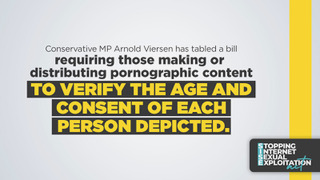
Ottawa, ON – Today, MP Arnold Viersen introduced Bill C-302, the Stopping Internet Sexual Exploitation (SISE) Act in the House of Commons. The SISE Act would require those making or distributing pornographic material for a commercial purpose to verify the age and consent of each person depicted. It also would prevent the distribution of pornographic material when consent has been withdrawn. Those who fail to verify age and consent face escalating penalties or jail time mirroring those in the mandatory child pornography reporting laws.
“For years, pornographic platforms in Canada have published sexually explicit material without any requirement to verify the age or consent of those depicted in them,” says MP Arnold Viersen. “As a result, egregious videos of sex trafficking, child exploitation, and sexual assault have proliferated on Canadian pornography websites. Many of these videos have been monetized, bringing in massive profits.”
“Once a video of exploitation has been uploaded, it is virtually impossible to eliminate. We have heard testimony from survivors whose lives have been shattered by the reckless actions of companies like MindGeek. Countless survivors have also been forced to relive their trauma and track down their own abusers in order to have content depicting their abuse removed. We must do more to prevent these videos from ever reaching the internet in the first place. It is time to place the burden of due diligence and corporate responsibility on companies rather than survivors and law enforcement. Consent matters. If a website is going to profit from making or publishing pornographic content, the SISE Act ensures they must verify the age and consent of every individual in every video.”
Click below for a pdf of Mr Viesen’s press release.
There’s been some chatter from Ottawa suggesting that Federal Justice Minister, David Lametti, would support changes to Canada’s prostitution laws, and that Liberal MP Hedy Fry is providing an enthusiastic push to legitimize such activities.[i] This would be an unpopular move with the majority of Canadians voters, according to a recent Nanos Research poll.[ii] Still, NDP Justice critic, Randall Garrison argues that decriminalization would bring safety to prostitutes and filed a motion in July requesting a parliamentary committee look into the matter.[iii]
Hedy Fry, Vancouver Pride 2017 Credit: InkedKenny/Xtra
Prostitution is illegal in Canada because it’s harmful to those who participate in it. That harm falls primarily on the women and girls who provide sexual services. Though prostitution is never safe, the debate about how to reduce its human cost rages on. To help you reinforce your perspective on the matter, I offer a brief rebuttal of three popular fallacies you’re likely to hear in discussions about making prostitution safer and ending the human trafficking that is associated with it.
Various Western countries have changed their legal approaches to prostitution in recent decades, providing us with an opportunity to learn from their experiences. The body of evidence internationally, demonstrates that legalization and decriminalization increase the volume of sex trade activities, and with it, human trafficking and other forms of violence. One researcher who studied the decriminalization of prostitution in Rhode Island concludes, “If prostitution is not recriminalized, the commercial sex industry, and consequently sex trafficking will continue to increase.”[iv]
Canada’s pre-2014 prostitution laws didn’t actually make prostitution illegal but made it more difficult for prostitutes (or ‘the prostituted’) and generally gave a free pass to their male buyers. Those laws were eventually hit with a charter challenge called Bedford versus Canada.[v] The attorney who launched the challenge, Alan Young, admitted to the Supreme Court that no country that legalized prostitution has successfully reduced the violence. Still, Young won his case. But within a year, the Harper Conservatives replaced the old laws with more helpful legislation; a version of the ‘Nordic’ or ‘Equality’ model. It outlawed the purchase of sexual services while making limited concessions for prostitutes, because they are assumed to be exploited persons. We can be thankful that Canada did not, instead, legalize or decriminalize prostitution because that would have only played into the hands of human traffickers and expanded exploitation, as we have observed in other countries.[vi]
Canada’s human trafficking laws are important for prosecuting offenders and helping to raise awareness about this hideous crime, but they don’t stop human trafficking from occurring. As long as we bank on the theory that we’ll end human trafficking by arresting pimps, we’ll continue failing to protect vulnerable women and girls. This is best evidenced in Ontario where the number of charges for buying sex is negligent, but the resources poured into human trafficking prosecutions are massive. Just last year, the then head of the Toronto Police Human Trafficking Unit, Nunzio Tramontozzi told CBC news: “[human trafficking is] really at an epidemic proportion now in Toronto…and across Canada.” While he was reluctant to laying charges for the purchase of sexual services, his team was arresting one or more pimps per week, on average. What was the result? “We have victims as young as 12 years old being forced into the sex trade…we’re not keeping up.”[vii]
Det. Sgt. Nunzio Tramontozzi Credit: CBC
Thankfully, our current prostitution laws have great potential for combatting human trafficking. I’ll explain how that works. To understand ‘the game’, you need to know the players. Many traffickers, or ‘pimps’, operate in a subculture where achievement is gauged largely by notoriety. Avoiding prosecution does nothing to build the infamy that is the quintessential measure of success. Therefore, the risk of arrest can be as much an enticement as a deterrent. Contrast that with the typical sex buyer, or “john”, who cultivates the opposite persona. To protect his good and decent reputation, he is likely to avoid arrest at all costs; even if it means resorting to self-control.
Pimps may more easily draw our contempt, but if men will stop buying sex, there will be no human trafficking of young women in prostitution. Like any other industry that operates on the principal of supply and demand, if the money stops, the sex trade will grind to a halt. You cannot stop the violence of the sex trade and allow men to fund it. We have a choice to make: We can protect the girls, or we can protect the men who pay for access to their bodies.
As long as one remains in the darkness of the sex trade, perceptions are skewed: Laws are cruel, police officers are the enemy and one will eventually surrender to the recurring abuse that is part and parcel of the industry. Those who become immersed in this subculture quickly experience an identity shift that causes them to view the world through an entirely different lens. Studies show the impact of prostitution to include extreme mental health difficulties. The damage is so troubling that even those who help rehabilitate these women are adversely affected.[viii] The things that expose a woman to, and keep her enmeshed in, this underworld should rightfully evoke compassion and a desire to understand. But she must not be the one to guide us on matters of justice while she remains captive to that altered mindset.
There are, however, many who, exit the sex trade and regain their place in society. And they achieve this while managing debilitating anxiety, mood disorders and, often, addictions. These are the sex trade ‘survivors’ who only begin to heal once they have exited prostitution and cut ties with those who remain involved in it. They will be first to tell you that ‘sex work’ is an illegitimate term because it’s meant to deny the inevitability of exploitative relationships and ongoing violence. While some prefer not to recount the atrocities they’ve endured, others confront their past, speaking on behalf of those who cannot yet grasp the truth about their experiences.
In conclusion, Canada’s 2014 legislative approach[ix] to prostitution provides this country’s very first offering of meaningful protection from commercial sexual exploitation. The rationale for discouraging prostitution is well founded and we must stay the course. Should the current Liberal government remove prohibitions on buying sex, it will be a callous betrayal of those for whom they claim to advocate.
In his November 12th Toronto Sun article “Accused Trafficker Offers Great Times” Brad Hunter declares, “Sex work and sex workers do not bother me…Too many Mrs. Grundys wag self-righteous fingers at women — and a world — they know nothing about. But sex trafficking is quite another matter. It is a 24/7 crisis that stings victims from St. John’s to Tofino.”
Edmonton Man, Ross Pickering, Accused of Human Trafficking
The article masquerades as an anti-human trafficking piece but is little more than a flimsy pro-prostitution rant. There are two things that all us guys know on the subject: 1. Forcibly offering up a young woman for sex is wrong. 2. The money that buys sex funds the crime of human trafficking.
Clearly, Brad, along with almost every other man, is anti-human trafficking. Big deal, it’s a cheap term. If they cared enough to change their behaviour, human trafficking would never have become a prevalent concern.
It’s not just the men. Cities like Toronto, or Edmonton where the “accused trafficker” resides, take their cut by granting licences for indoor prostitution. While such corrupt practices seek to legitimize prostitution, it remains a crime in Canada because it’s inherently exploitative and commonly involves human trafficking. Even if human trafficking is not involved, the “sting” Brad mentions still occurs, causing extreme and often irreparable harm. All the while, mayors like Tory and Iveson continue pretending to care.
Brad is partly right. Normal people don’t think well of prostitution and don’t understand why people engage in it. Calling them “Mrs. Grundys,” he infers that their opinions are too prudish to be taken seriously. I happen to know dozens of respectable adults who were blind to the commercial sex industry until it came knocking. They are the sleep-deprived, heart-crushed members of a support group I run for parents devastated by the exploitation of a daughter of any age.
When it happens to your own daughter it turns your world upside down and you’ll do anything to stop it. You’ll be hard pressed to find anyone who has more clarity than my ‘Grundys’ on how prostitution, let alone human trafficking, destroys young lives. So-called “sex work” may not bother Brad, but perhaps it would if he saw it through the eyes of a parent.