Men Ending Trafficking Men Ending Trafficking (Toronto) and EmpowerMen (Winnipeg) co-sponsored a series of events on Parliament Hill last week to recognize and discusses the Protection of Communities and Exploited Persons Act (PCEPA 2014). The endeavor was centered around the idea that every Senator and Member of Parliament should own a copy of the powerful new book, “WHEN MEN BUY SEX: Who Really Pays?” by Heinz & King. And so, on the 11th anniversary of PCEPA, we delivered 448 individually addressed copies of book to our nation’s capital!
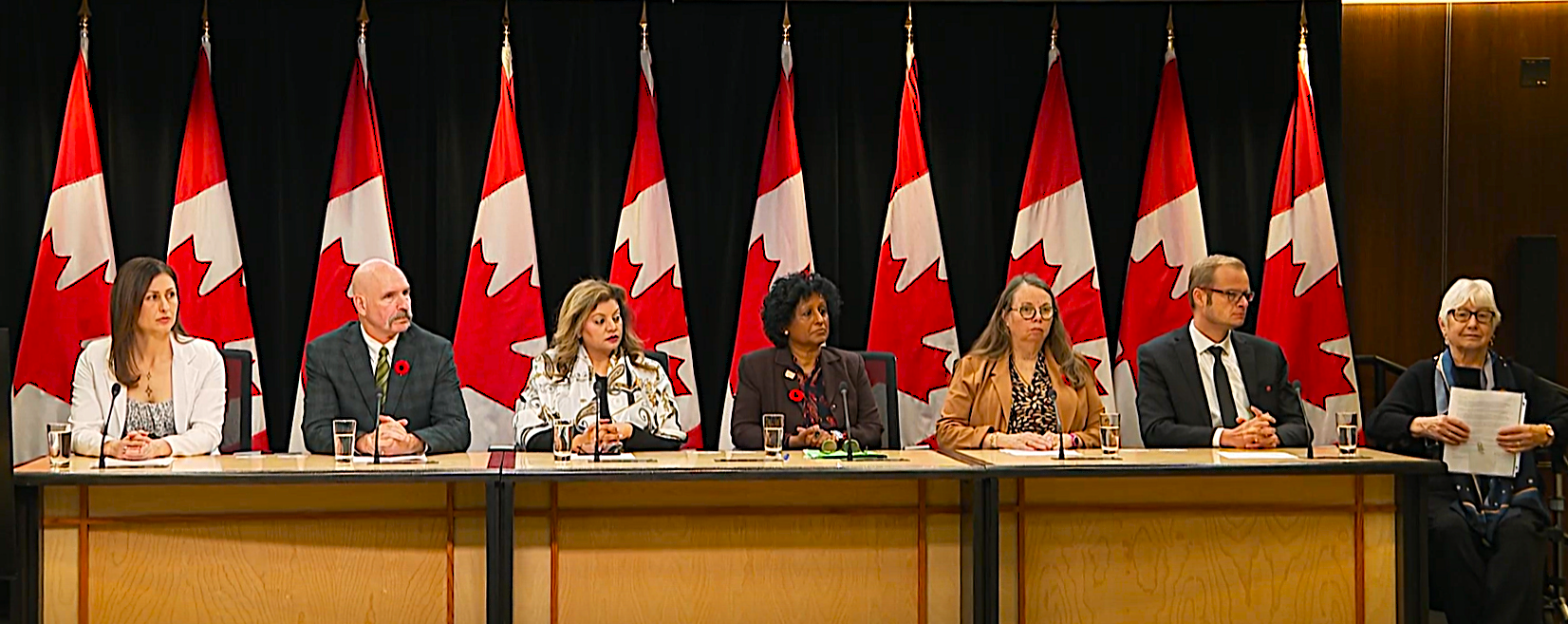
We were hosted by MP Arnold Viersen and Senator Julie Miville-Dechêne, and joined by an impressive team of advocates lead by co-authors Andrea Heinz and Kathy King. Last Thursday, before departing Ottawa, we gathered for a parliamentary press conference. Below is my statement.
Press Statement, John Cassells, November 6, 2025
My name is John Cassells. I am the Founder and Board Chair of Men Ending Trafficking, a charitable advocacy organization based in the Toronto Area. Also, in my full-time role with SIM Canada, I am the Director of an agency called Lifeworthy. In addition to assisting young women exiting the sex industry, we provide support and guidance for parents of adult and minor-aged children who are actively being exploited.
The year was 2014 when Justice Minister, Peter MacKay signaled that the Government of Canada had come to a new understanding on the concern of prostitution; that it is profoundly harmful and inherently exploitative. He had searched for a legal framework to lower the risk to those in prostitution and found none. The clear path, then, was to discourage, wholesale, the prostitution industry. That would largely be accomplished by deterring the purchase of sexual services.
Click to watch John speaking at the parliamentary press conference.
MacKay placed a robust legal scheme on the table: The Protection of Communities and Exploited Persons Act or PCEPA. Prostitution, which had been historically passed off as a mere public nuisance, would be more appropriately be reframed as a crime of exploitation.
I regret to tell you that Canada’s 2014 anti-prostitution law was neither appropriately implemented nor enforced in the provinces and territories, and prostitution activities continue to be licensed by our cities. Even some politicians elected to look out for the wellbeing of their own communities remained in opposition to PCEPA. In the House of Commons, we heard it argued that “Sex work is work.”
Which is it? Is prostitution a viable career option or is it a form of exploitation? The dozens of parents in Lifeworthy’s parents’ program will answer the question without hesitation. They will tell you about the radical changes in the behaviour of their children and the loss of relationship they experienced. They will speak about the violence perpetrated against their daughters and describe the injuries to their bodies. They will testify to the deteriorating mental and physical health of their daughters and lament over the addictions that took hold from efforts to self-medicate. Many will share that the nightmare continues without relief or closure. Some, who have received closure, will tell you about the anguish of having to bury a daughter. These are some of the people who are most qualified to tell you what happens when men buy sex.
In conclusion, I’ll quote from the book, When Men Buy Sex, Who Really Pays, by Andrea Heinz and Kathy King (Page 165) “…condemnation of sex trafficking is an important first step, but distinct hypocrisy prevails if we do not address the underlying issue of consumer demand.”
Click for link to a CPAC recording of the full press conference.